Power, fuel, and engine configuration: A RIB’s engine system determines its performance, fuel consumption, and longevity. This guide details the key criteria for choosing an engine system suited to every boating scenario and every boat size.
Why the Engine Determines the Value of a RIB
On a RIB, engine selection is not just a matter of horsepower. It determines how the boat handles at sea, fuel consumption, range, and, ultimately, the owner’s long-term satisfaction. An improperly sized engine (too powerful or underpowered) compromises the hull’s performance, affects stability, and can lead to premature wear and tear on the entire system.
For a boating professional—whether a dealer or rental operator—this information is strategic. The engine directly influences the perceived value of a boat offered for sale or rent. When it is designed in harmony with the hull, the empty weight, and the intended use, it becomes a powerful selling point, far beyond the mere number listed on the technical specifications sheet.
Outboard or inboard: Which Configuration Is Best for a Recreational RIB?
The outboard motor, the industry standard for semi-rigid boats
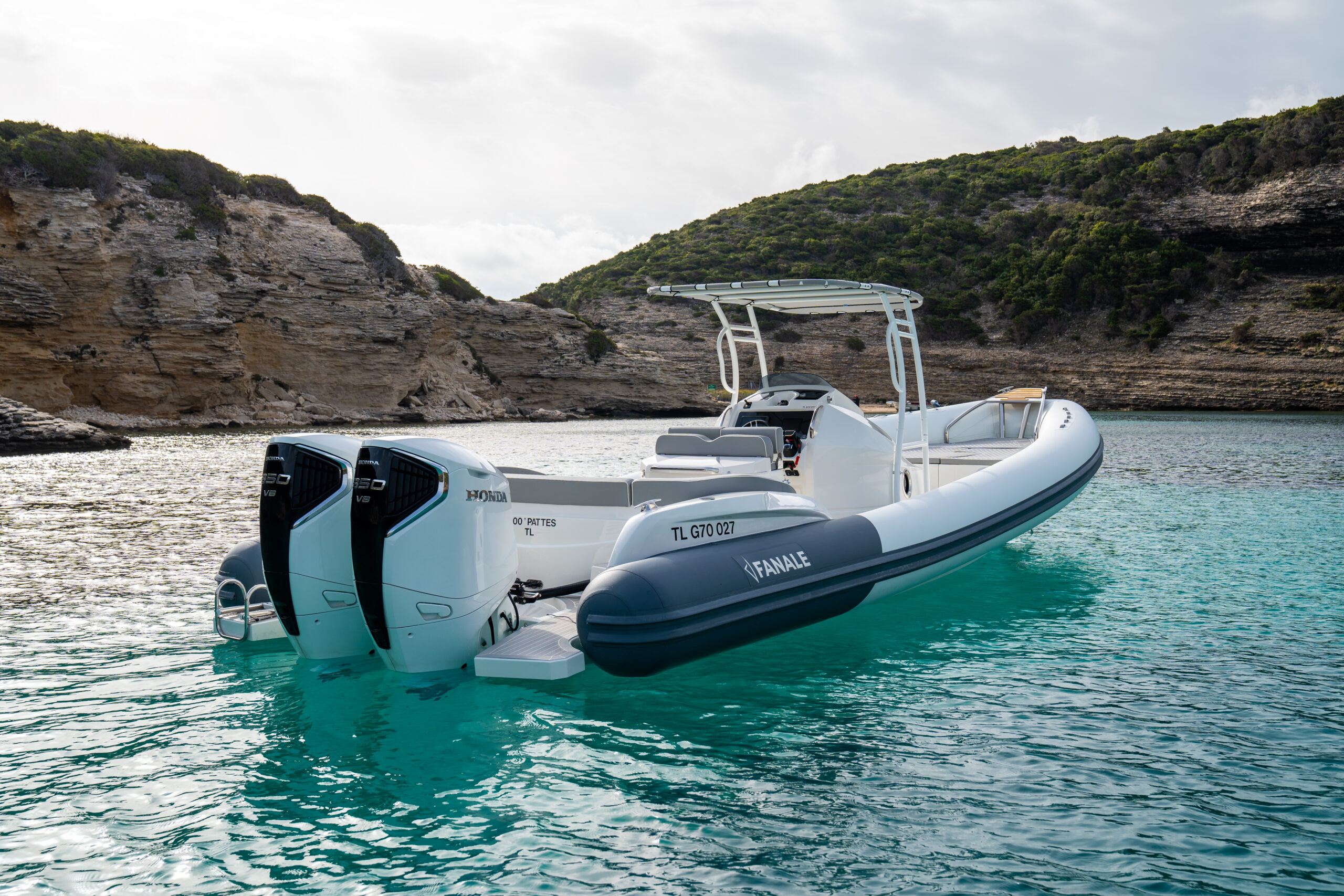
Virtually all recreational RIBs are equipped with an outboard motor. This configuration is preferred for its optimized power-to-weight ratio, simplified maintenance, and the extra space it frees up on board. The ability to fully retract the engine also makes it easier to navigate in shallow waters and to anchor. On boats such as the Filanciu 650 or the Falchettu 700, an outboard motor is the natural choice, with power ratings ranging from 115 to 250 CV.
The in-board engine—an option reserved for large vessels
Inboard engines are typically found on large RIBs, generally over 10 meters in length. They provide better weight distribution, a lower center of gravity, and reduced noise levels at cruising speed. On the other hand, maintenance is more complex, and interior space is reduced by the integration of the engine block. This configuration remains a niche option in the recreational RIB market and is primarily used on boats designed for offshore or professional use.
Match the power to the dimensions and CE category of the RIB
The manufacturer's power range defines the limits within which the engine operates in accordance with the hull design, empty weight, and passenger capacity. Exceeding this range can lead to stability issues and premature wear. Under-specifying the engine compromises performance and increases fuel consumption.
6- to 7-meter RIBs: Versatility and Fuel Efficiency
In this lineup, engine power ranges from 115 to 250 CV. A Filanciu 650 with a 115 CV engine is ideal for coastal cruises and family outings. A 7-meter RIB equipped with up to 250 CV provides the torque needed for more sporty activities or transporting passengers at maximum capacity.
Rigid-hulled inflatable boats (RHIBs) from 8 to 10 meters: offshore comfort and twin-engine configuration
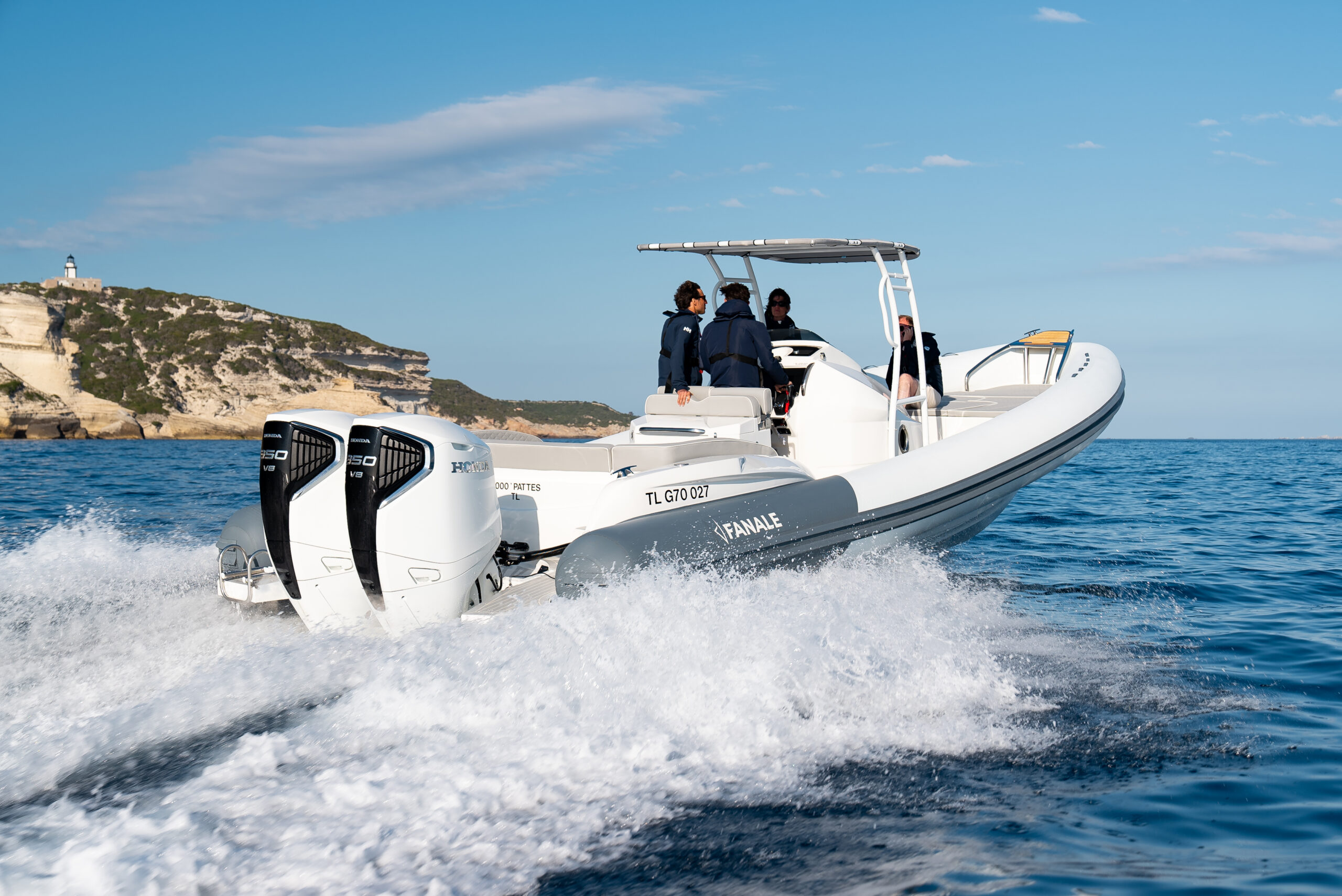
Starting at 8 meters, the empty weight increases significantly, and the range of navigation options expands. Recommended engine power ranges from 350 to 700 CV. Twin engines may be a viable option on some of these vessels: they provide safety in the event of an engine failure, better maneuverability in port, and a more even distribution of power. The Libecciu 1000, with its maximum power of 700 CV and 550-liter fuel tank, exemplifies this focus on range for demanding voyages.
Beyond 10 meters: power, range, and challenging navigation
Rigid-hulled inflatable boats longer than 10 meters are designed for offshore operations that require high-output engines. The Maio 1400, certified in Category B, can accommodate up to 1,100 CV with a 1,000-liter fuel tank. At this level, engine speed selection and fuel management become critical factors in optimizing range.
Gasoline, diesel, electric: Which fuel is best for your needs?
Four-stroke gasoline engines dominate the recreational RIB market. They offer smooth operation, moderate weight, and easy maintenance. Today’s direct-injection technologies have significantly reduced fuel consumption while improving acceleration response.
Diesel remains a viable option for large or heavy-duty vehicles (rental fleets, commercial use). Its superior torque at low RPM, durability, and lower fuel consumption (up to 30% savings compared to gasoline) make it a sensible choice when annual operating hours are high.
Electric motors are currently best suited for short trips and restricted areas. Their limited range and charging times limit their use to supplementary applications, although the technology is advancing rapidly.
Selecting the Right Motor for a Custom Manufacturing Process
At Fanale Marine, the engine system is not simply an afterthought. It is integrated from the design phase onward, in harmony with the polyester hull design, the weight of the Hypalon floats, and the customer’s chosen interior layout. This artisanal approach allows us to tailor the power output, fuel type, and engine configuration to the customer’s actual intended use.
Are you setting up an Alpana 820 for seasonal charter in the Mediterranean? The engine will be sized to handle frequent trips with passengers at maximum capacity. Are you ordering an Altore e Sole 900 Open for private use focused on coastal cruising? The choice will be based on a balance between cruising comfort and fuel efficiency.