Hypalon or PVC? The material used for the floats directly affects the durability, maintenance, and resale value of an inflatable boat. This guide compares the two options to help you make the right choice.
Hypalon and PVC: two materials, two manufacturing approaches
PVC (polyvinyl chloride) is a thermoplastic that is joined using high-frequency heat welding. This process, which can be fully automated, enables rapid mass production and keeps manufacturing costs low. PVC remains the most widely used material for entry-level and mid-range semi-rigid boats.
Hypalon (the trade name for chlorosulfonated polyethylene, or CSM) is a synthetic rubber that is assembled using cold bonding. This method, which is primarily manual, requires artisanal expertise and a longer production time. The fabric itself is more expensive to purchase, which explains the higher final price. In return, Hypalon offers significantly superior mechanical properties and environmental resistance.
The table below summarizes the main differences between the two materials:
| Criterion | PVC | Hypalon (CSM) |
|---|---|---|
| Assembly | Heat Sealing (Automated) | Cold bonding (manual) |
| UV Resistance | Average (accelerated degradation) | Excellent (stability over 20 to 25 years) |
| Abrasion Resistance | Moderate | High |
| Saltwater | Susceptible to aging | Excellent performance |
| Hydrocarbons | Low | High |
| Repair | Difficult (result is not sustainable) | Feasible and sustainable |
| Appearance and texture | Shiny, smooth, rigid | Matte, supple, rubbery |
| Acquisition Cost | Lower | Superior |
Durability, UV resistance, and maintenance: what makes the difference in boating
Performance in the Mediterranean and under conditions of intensive use
In the Mediterranean, UV exposure is prolonged and summer temperatures are high. These conditions accelerate the aging of PVC, which tends to fade, harden, and lose its elasticity over the course of the seasons. Cracks may appear in the areas that are most prone to bending.
Hypalon, by its very nature, withstands this type of stress. Its synthetic rubber composition gives it dimensional stability in the face of temperature fluctuations and remarkable resistance to UV rays. This is why it remains the material of choice for intensive use: rental fleets, professional RIBs, and regular sailing in saltwater.
Routine Maintenance and Ease of Repair
Maintenance of a Hypalon float is limited to rinsing it with fresh water after each use and periodically cleaning it with a suitable product. In the event of damage, repairs are made using cold bonding, a process that can be performed in a workshop without heavy equipment.
PVC requires a similar level of maintenance but is more demanding over the long term. Repairs are more difficult to guarantee, and their durability over time is inferior to that of a Hypalon bond.
Selecting the Float Material for Custom Manufacturing
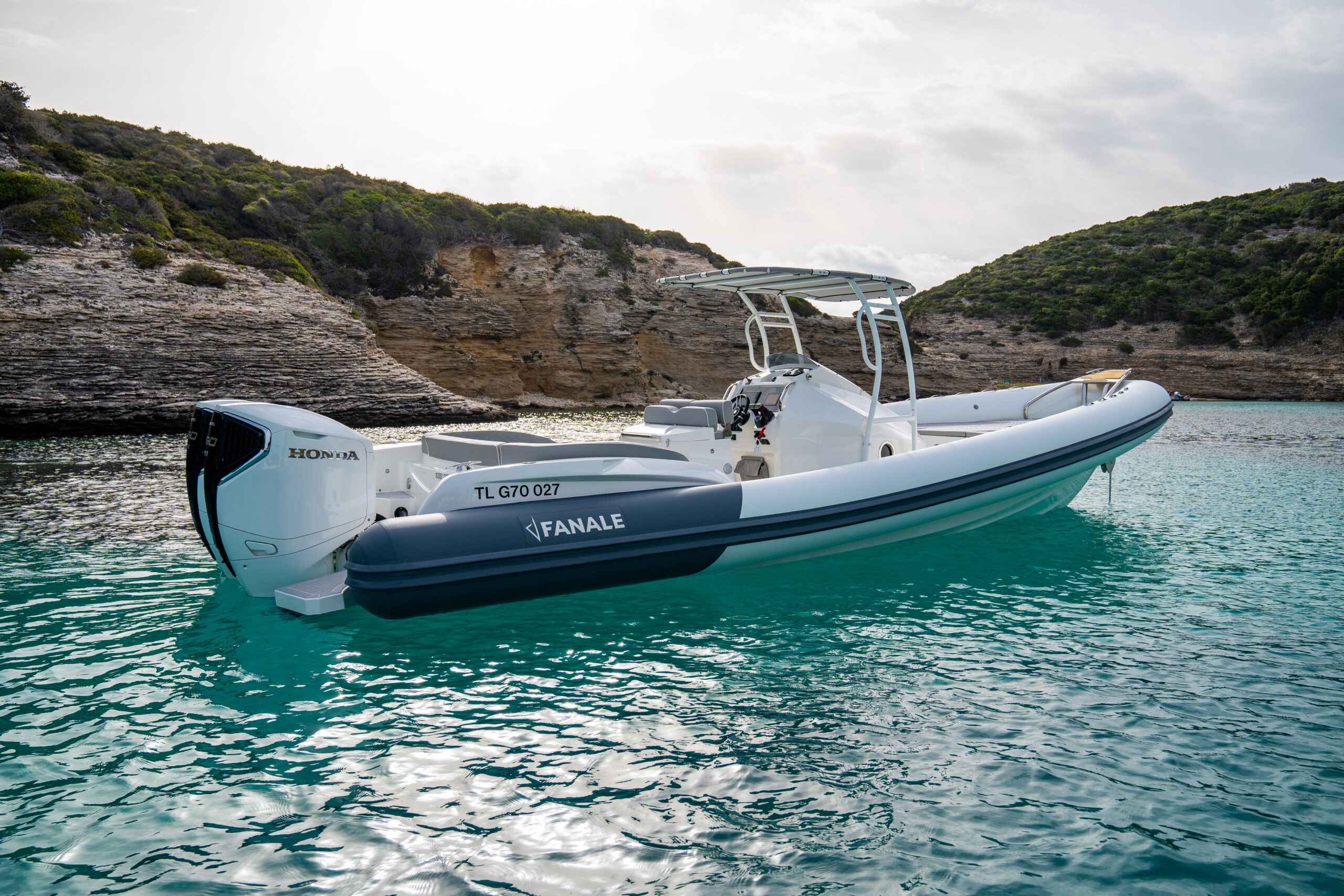
At Fanale Marine, the choice of Hypalon is not simply presented as an option in a catalog. It is an integral part of the design process, consistent with the laminated polyester hull, the intended use, and the level of finish specified by the customer. Starting with the Filanciu 650, all models in the lineup (the Falchettu 650, the Alpana 820, the Altore e Sole open,the Altore 900 Cabin, as well as the Libecciu 1000 and the Maio 1400) are equipped with Hypalon floats.
This artisanal approach ensures consistency between the float material, the hull’s weight, and the vessel’s overall balance. The bonding process, performed by hand, also allows the floats to be customized to the specific requirements of each order, including the selection of custom colors.
Hypalon or PVC: How Do They Affect a Fleet’s Resale Value and Profitability?
For a dealer or rental company, the choice of float material should be based on total cost of ownership, not just the purchase price. A RIB equipped with Hypalon floats retains a higher residual value on theused market, precisely because its durability instills confidence in the buyer.
In a rental fleet, Hypalon’s durability reduces the frequency of maintenance and the risk of having to replace floats prematurely. This translates to measurable cost savings over 5 to 10 years of operation.